Commonly known as gum disease, periodontitis or periodontal disease is an infection of the gum tissue around the teeth, which is a leading cause of tooth loss in adults.
At Dental Solutions, we take periodontics in Warrington seriously – helping patients to preserve the supporting structures of their teeth by preventing and treating gum disease.
Gum health is essential to overall oral health, as periodontal disease will negatively affect all other dental treatments. When you come to our practice for periodontal care, our experts can help you prevent gum recession, tooth decay, tooth loss, and bone loss.
While prevention is always better than cure, it’s important to visit your dentist if you think you might have gum disease, because the earlier we catch it, the easier it will be to treat it.
Learn more about periodontitis and how we treat gum disease below, then get in touch to schedule a periodontics Warrington appointment.
Contact Us
What Is Gum Disease?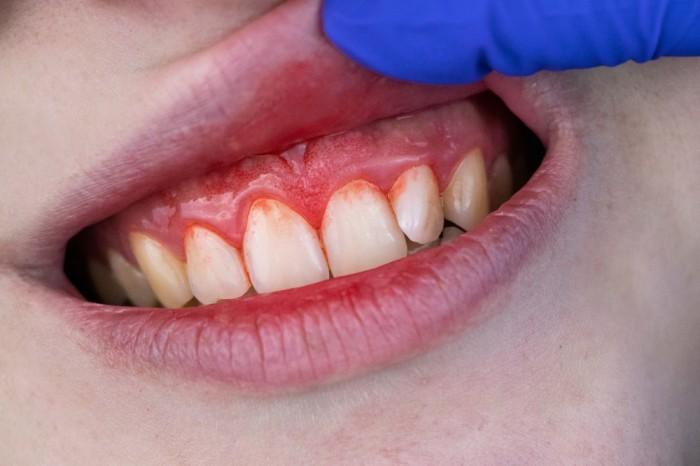
Gum disease is an infection of the tissue around your teeth caused by bacteria building up.
When teeth aren’t cleaned properly, this allows bacteria to multiply on the surfaces and form a sticky film of plaque. This colourless film can harden over time to form calculus or tartar, a yellow or brown substance that builds up around the gumline.
This build-up irritates the gums and cannot be removed by brushing or flossing – a dental hygienist must use specialist tools to deep clean the teeth and gumline.
If left untreated, the multiplying bacteria can eat away at the gums, teeth, and underlying bone. This puts people at risk of losing teeth and parts of their jawbone.
For patients with dental implants, the built-up bacteria can also cause peri-implantitis, which leads to gum inflammation, pockets of reduced gum tissue, and bone loss around the implant root – potentially resulting in dental implant loss.
Plaque control is vital to help prevent gum diseases, which is why it’s so important to not only maintain good oral hygiene at home, but also to visit your dentist and dental hygienist for routine check-ups and professional teeth cleaning at least once every 6 months.
Call Us
Gingivitis vs Periodontal Disease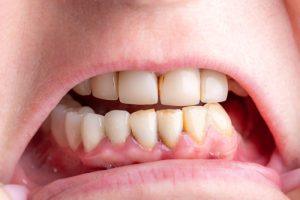
There are several different names for gum disease, including gingivitis, periodontal disease, and periodontitis. If you’re wondering what the difference is between gingivitis and periodontal disease, here’s an explanation of the four stages of gum disease:
- Stage 1: Gingivitis – Mild gum disease that can typically be reversed by removing plaque and tartar with scale and polish treatments.
- Stage 2: Early Periodontal Disease – Progressive gum disease that has reached the bone, requiring deep cleaning of the gum pockets.
- Stage 3: Moderate Periodontitis – Irreversible gum disease that requires intense cleaning around the tooth roots to remove bacteria.
- Stage 4: Advanced Periodontitis – Severe gum disease that threatens irreversible bone loss and tooth loss without surgical intervention.
Gum disease starts out as gingivitis, which causes red and swollen gums that may bleed when you brush your teeth. It’s commonly reversible at this early stage.
If it’s left to develop further, gingivitis can turn into periodontal disease or periodontitis. This is a more serious level of gum disease that can cause your gums and bone levels to recede, resulting in loose teeth that may eventually fall out.
This is a scary thought, but the Dental Solutions team is here to help patients treat gum disease and reduce reoccurrences with periodontics in Warrington.
Symptoms of Gum Disease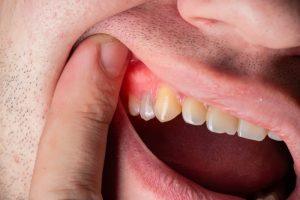
It’s believed that around half of the adult population in the UK is affected by some form of gum disease, but because it isn’t always painful, many people don’t realise they have it.
Healthy gums are pink and firm, with clean teeth that feel secure. If your gums don’t look or feel like this, you should visit your dentist for an examination, especially if they’re sore.
The early signs of gum disease to look out for include:
- Red and swollen gums that may feel tender
- Bleeding gums when you brush your teeth
- Persistent bad breath, even with brushing
The symptoms of advanced gum disease can include:
- All of the signs mentioned above
- A constant bad taste in your mouth
- Gums pulling away from the teeth
- Loose teeth or spaces between teeth
- A change in the way teeth bite together
- Gum abscesses with pus or discharge
In rare cases, gum disease can turn into acute necrotising ulcerative gingivitis, also known as ‘trench mouth’. Symptoms include painful gums with ulcers, excess saliva, a metallic taste in the mouth, a high fever, and difficulty swallowing.
If you are experiencing any of the symptoms listed above, please book an appointment at Dental Solutions as soon as possible to diagnose and treat periodontal infection.
Gum Disease Treatment Warrington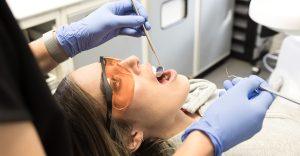
Diagnosing gum disease at the earliest stage is the key to being able to reverse it with deep cleaning and improved oral hygiene. However, if you wait until the symptoms become urgent before going to the dentist, it may have progressed to periodontal disease.
The first step is to attend a periodontics Warrington consultation, where we will examine your teeth and gums thoroughly to determine the presence and progression of infection.
The gum disease examination process involves the following steps:
- Inspecting the teeth, gums, tongue, and mouth for plaque and inflammation
- Measuring the depth of any ‘pockets’ between the teeth and gums
- Checking the position and height of surrounding bone with dental X-rays
- Reviewing your dental and medical history for any contributing conditions
After establishing the extent of your gum disease, we can determine the best treatment options for you and discuss a personalised plan to treat gingivitis or periodontitis.
Early gum disease can often be eradicated or controlled with non-surgical methods, but advanced periodontal disease may require restorative surgical procedures.
Here at Dental Solutions, we can provide the different types of periodontal care explained below to help you get plaque, tartar, and gum disease under control.
Become a Member
Periodontal Cleaning
If your gum infection is caught in the earliest stages, it may be possible to treat gingivitis with a thorough scale and polish. However, if it has progressed to moderate gum disease, you will need more intense periodontal therapy, known as scaling and root planing.
- Scaling – We use specialised instruments to mechanically remove plaque and calculus from below the gumline (usually under local anaesthesia to minimise discomfort).
- Root planing – After deep scaling, we use professional tools to smooth the surface of the tooth roots, which will discourage bacteria from building up on them again.
This type of non-surgical gum disease treatment may require several visits to the dentist and dental hygienist to complete, but over time, it should help your gum tissue to draw back over the teeth and close the pockets formed by periodontitis.
To ensure the infection doesn’t keep coming back, you must follow a strict cleaning routine at home and attend regular dental hygienist sessions for professional cleaning.
Periodontal Surgery
Deep pockets that bleed tend to indicate severe active periodontal disease, which cannot be treated by standard scaling and root planing alone. If the patient is at risk of bone loss and tooth loss, surgical gum disease treatment will be required.
Gum disease surgeries aim to move gum and bone to better access the tooth roots for intense deep cleaning, or to replace the lost soft tissues and bone after cleaning.
There are several different surgical periodontal treatments available, which include:
- Gingival flap surgery – Also known as pocket reduction surgery, the dentist gently lifts the gum tissue away from the teeth to treat the tooth roots, then stitches it back.
- Gum grafting – Receding gums can leave tooth roots exposed, so gum graft surgery may be necessary to replace the missing gum tissue and protect the teeth.
- Dental bone grafts – When severe periodontitis causes bone loss, a bone graft may be able to replace some of the lost bone and help it regenerate naturally.
- Crown lengthening – If a tooth has broken off at the gum or near the gumline, more tissue might need to be removed to make enough space to fit a dental crown.
- Tooth extraction – If a tooth is severely infected as a result of advanced periodontitis, it may need to be pulled out (though it can be replaced with a dental implant).
The type of oral surgery needed will depend on the extent of your gum disease and its effects on your teeth and the supporting bone. If you need surgical treatment for gum disease, we will discuss your options with you and make you as comfortable as possible throughout.
Periodontal Maintenance
Following the completion of successful periodontal treatment, where inflammation and infection has been brought under control, it’s important to maintain these improvements and prevent regression through supportive periodontal care.
After initial treatment, frequent reassessment will be necessary to ensure the patient is responding well to the periodontal therapy and the gum disease hasn’t recurred.
Your dentist will carry out a risk assessment to determine how often you need to come back for periodontal check-ups or maintenance treatments. This may be once every 1–4 months, depending on how stable your condition is and the level of plaque and inflammation.
To help you take care of your gums at home, we will set out a periodontal maintenance programme that you must follow diligently, including a professional cleaning schedule.
Our friendly team will always do our utmost to ensure you have everything you need to keep your teeth and gums in the best possible condition.
Meet Our Dental Hygienists
At Dental Solutions, we’re proud to have a team of friendly and skilled staff who go above and beyond to deliver an excellent patient experience, no matter the treatment.
When you come to us for gum disease treatment in Warrington, you’ll be seen by our talented dental hygienists, Victoria Middleton and Sarah Towns.
Our longstanding hygienist Victoria (Vicky) has been working with principal dentist Dr Gavin Laidlaw for more than 20 years, while our dental hygiene therapist Sarah has been caring for patients at the practice for over 8 years now.
Both Vicky and Sarah are known for providing patient, gentle, and positive oral hygiene care, while taking a special interest in periodontal treatment and dental implant care.
Oral surgeries such as bone grafting and dental implant placement will be performed by leading oral surgeon Dr Richard Brookshaw, assisted by Dr Gavin Laidlaw.
All members of our team stay up to date with the latest training and can help nervous patients feel comfortable during their time at our dental practice.
If you’re especially anxious about gum disease surgery, you can enquire about conscious sedation, provided by our visiting consultant anaesthetist, Dr Patrick Waits.
The Dental Solutions team is here to help you tackle gum disease and dental phobias, so you can restore your oral health and enjoy a pain-free, confident smile.
Free Consultation with Treatment Coordinator
Book a Periodontics Warrington Consultation
Learning to recognise the signs of gum disease and taking action before it gets worse is the best thing you can do to keep your gums and teeth healthy and infection-free.
Booking a consultation at Dental Solutions Warrington will allow you to be examined by dental experts, who can diagnose gum disease and provide appropriate treatment.
We can help with treating gingivitis or periodontal disease and other problems they may cause, such as peri-implantitis, gum shrinkage, long teeth, and bad breath (halitosis).
Our dental hygienists can also provide personalised advice on proper brushing and flossing techniques to help prevent gum disease at home between professional hygiene sessions.
For more information on gum disease treatment in Warrington, or to book a consultation, please call our clinic on 01925 756 565 or click the link below to send a message.
We will be happy to provide gum health support through periodontics in Warrington.
Book An Appointment
How to find us
Meet the Implant Team
Victoria Middleton
Diploma in Dental Hygiene
Victoria (or Vicky as she likes to be known) is the longest-serving hygienist at Dental Solutions and has worked with Gavin Laidlaw for over 20 years. Vicky first qualified as a hygienist from…
FAQs
Are there risk factors for periodontal disease?
Yes – while periodontal disease is a very common condition that most people will experience at some point, there are certain factors and lifestyle choices that can increase your risk of developing gum disease and make the symptoms worse.
Several common risk factors for periodontal disease include:
- Age – Elderly patients typically have the highest rates of periodontitis. It’s less common in children (though parents should still watch out for symptoms).
- Genetics – Unfortunately, some people may simply be genetically susceptible to developing periodontitis, making dental hygienist visits even more crucial.
- Pregnancy – Hormonal changes during pregnancy can affect the way the gum tissue reacts to plaque, making gum disease more likely.
- Smoking – Tobacco use is widely known to cause serious illnesses, so it’s not surprising that it can also increase the risk of gum disease and bone loss.
- Stress – The immune system is weakened by stress, so it’s harder for the body to fight off infections, which includes periodontal disease.
- Grinding teeth – Excessive pressure on the teeth and supporting tissues can speed up the progression of periodontitis and gum tissue destruction.
- Poor nutrition – Not only can a diet lacking in nutrients lead to obesity, but it can also compromise the immune system, leading to gum infections.
- Medications – Certain drugs, including heart medication, antidepressants, and oral contraceptives, may cause dry mouth and increase bacteria in the gums.
- Systemic conditions – Health conditions like diabetes, cardiovascular disease, and arthritis can increase inflammation in the body, including the gums.
If any of these gum disease risk factors apply to you, please make sure to visit your dentist and dental hygienist regularly (at least once every 6 months) to help mitigate your risk of developing severe gum disease.
What happens if gum disease isn’t treated?
If gum disease is left untreated, it can develop from the early stage of gingivitis to much more serious periodontitis. Untreated periodontal disease can cause receding gums, painful abscesses, loose teeth, and eventual tooth loss.
This is because the build-up of plaque and tartar that causes gum disease contains bacteria that produce harmful toxins. These gradually damage the gum tissue and underlying bone, and if the bacteria enter the bloodstream, there is a high risk of developing a wide range of severe health problems.
For example, bacterial gum infections that spread throughout the body can lead to cognitive impairment, metabolic syndrome, obesity, arthritis, lung disease, kidney disease, heart disease, and even cancer. They can also cause pregnancy complications.
If you have dental implants, worsening gum disease can develop into peri-implantitis, where the bone around the implant deteriorates and can no longer support it.
As you can see, good gum health is vital for general health, so you should never overlook symptoms of gum disease and always attend routine dental check-ups.
What can I do to prevent gum disease?
As with all health problems, prevention is the best approach. The key to avoiding gum disease is to prevent plaque from building up on your teeth and gums.
You can do this by maintaining a good oral hygiene routine and following these tips:
- Brush your teeth twice a day – Use a fluoride toothpaste and brush for at least 2 minutes each time, cleaning each tooth with small circular motions.
- Use an electric toothbrush – This will provide the necessary dexterity and pressure to clean all the surfaces of your teeth (so you don’t have to do as much work!).
- Use interdental cleaning aids – Dental floss or TePe brushes can get into the gaps between your teeth that your toothbrush can’t reach as easily.
- Stop smoking – The aim is to reduce inflammation and have healthy pink gums, but smoking increases inflammation and can turn gums yellow, brown, or black.
- Visit your dentist regularly – Remember to attend six-monthly appointments with your dentist and dental hygienist to keep your teeth and gums healthy.
This last tip is very important, as attending periodontics Warrington appointments will allow a dental hygienist to deep clean your teeth, check for signs of periodontal disease, and give you personalised advice to improve your oral hygiene at home.
Back to Hygienist Dentistry


